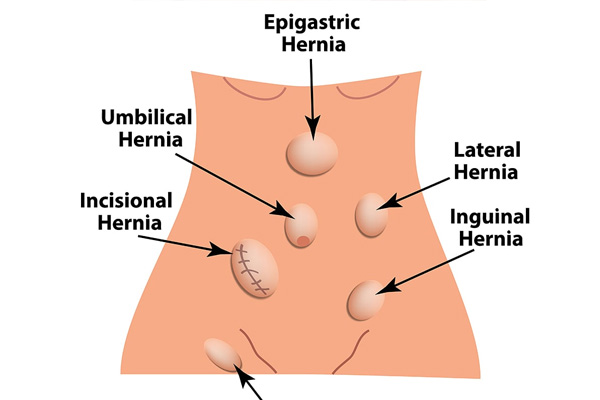
An incisional hernia is an iatrogenic surgical condition that comes about after an incomplete healing of a surgical wound or a weakened abdominal wall where the surgical incision had been made. It is mainly seen in postoperative patients who have had a surgery of the abdomen, especially of the peritoneum. It usually comes along with an infection.
1. Incisional Hernia: Causes and Risk Factors
The sutures that are tied deeply to the surgical wound are untied and the incisional hernia slowly sets in as an abdominal burst around the 10th-day post-operation. Some factors promote the development of the incisional hernia such as the choice of the suture the surgeon uses; in which sutures such as the catgut have a higher incidence of the suture being self untying.
The method of suturing also matters a lot. Other minor factors include an operation to the pancreas, in which the organ releases enzymes which are responsible for the dissolution of the self-tissues or the suture material. The presence of an internal infection is a strong indicator of whether the wound will burst postoperatively or not.
Patient factors could be also responsible for the incisional hernia formation such as violent coughing or if the protein levels in the patient are low such as the rate of wound healing is delayed as in malnutrition and also in obese patients.
2. Indications
The surgery is indicated for any patients who have their incisional site wound open with or without herniation of the abdominal contents.
Infection of the abdomen during wound healing which causes bursting of the wound sutures and herniation of the abdominal contents is also a strong indication for this surgery.
3. How is the procedure done
For the incisional hernia repair, two approaches have been recommended which differ based on the size of the wound.
The simple apposition technique
This technique is used for larger incisional hernias
The surgeon has to make sure the patient is fit for the surgery and the consent form has been signed
The surgical procedure is relatively straight forward; it is an incision of the hernia sac and reduction of the intestinal contents then suturing the abdomen with adequate lengths of a non-absorbable suture following the layers of the abdomen.
The plastic fiber mesh technique
This technique is used to handle a small incisional hernia of less than 4 cm in length.
Incision is made and the fiber mesh is placed and secured in place.
4. Risks
There is a moderate chance that the hernioplasty might fail to return the abdominal contents in the abdominal cavity l especially if the patient is obese. There is a risk of a paralytic ileus because of the manipulation of the intestine during the operation and when the incisional hernia occurs. The final risk that the patients face with this operation is complications associated with breathing as the surgeon might reduce the intestinal contents in such a way that it pushes the diaphragm up so high that it can’t accommodate the normal breathing process. Anesthetic risks should be anticipated.
5. How you prepare for the surgery
Because this is a highly sensitive operation for obese patients, the doctor would recommend dieting to cut off some weight before the incisional hernia repair is carried out. You are required to show up to the health care facility about a day to the surgery. This will give the caregivers enough time to run further lab blood tests and other tests that might be required before the surgery. This is mainly to assess the current status of the patient. The caregivers will still assess if you are fit for the surgery particularly to prevent the adverse effects of the anesthesia. This will be done through a comprehensive history taken from the patient and physical examination. The patient is then given prophylactic antibiotics before the surgery is done to prevent any infections. As of any surgical procedure that you’ll be required to be under general anesthesia, the patient is required to fast for about 8-12 hours to avoid complications of the anesthesia. An intravenous line is required to feed the required drugs into the body system of the patient.
6. Recovery after surgery
The patient should be advised on the postoperative behavior until the wound is well healed. What is expected of the patient includes
The patient should avoid any activity that would increase the intraabdominal pressure such as persistent coughing or strenuous exercises such as gyming or lifting of heavy materials.
The patient is not required to eat anything by mouth. So gastric decompression is done and the patient is given all the food they require intravenously until they are well healed.
To prevent thrombi formation in the patient which could lead to a potentially fetal deep venous thrombosis as a result of immobility, ambulation of the patient is highly encouraged.
7. Outcomes after surgery
A strong recurrence of the condition is noted in about 50% of the patients who undergo the surgery, especially using the simple apposition technique. For those with whom the net closure technique was used at the specialized treatment centers a lower recurrence of about 12% is experienced. Wound healing and return to normal work takes only several weeks.